

You woke up with itchy welts, and you have no idea where they came from. You checked your sheets, found nothing obvious, and now you’re lying awake, wondering if something is living in your mattress. That uncertainty is worse than the bites themselves.
This guide gives you the exact signs that confirm a bed bug infestation, how to physically inspect your bedroom, and what to do tonight to stop getting bitten before a professional arrives.
What Bed Bugs Actually Look Like
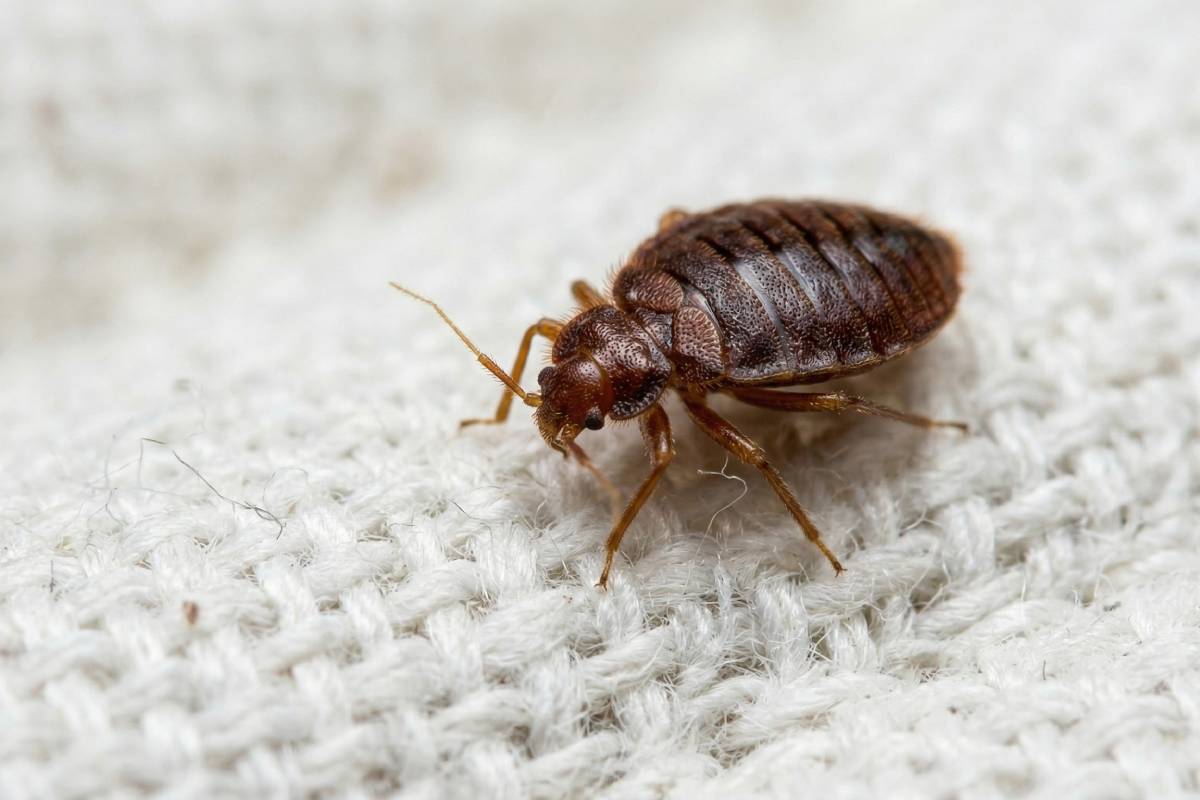
Adult bed bugs are flat, oval, and roughly the size of an apple seed (4-5mm). Their colour shifts from pale yellow-brown when unfed to dark reddish-brown after feeding.
Nymphs (juveniles) are nearly translucent and as small as 1mm. They are nearly impossible to spot without a flashlight and a magnifying glass.
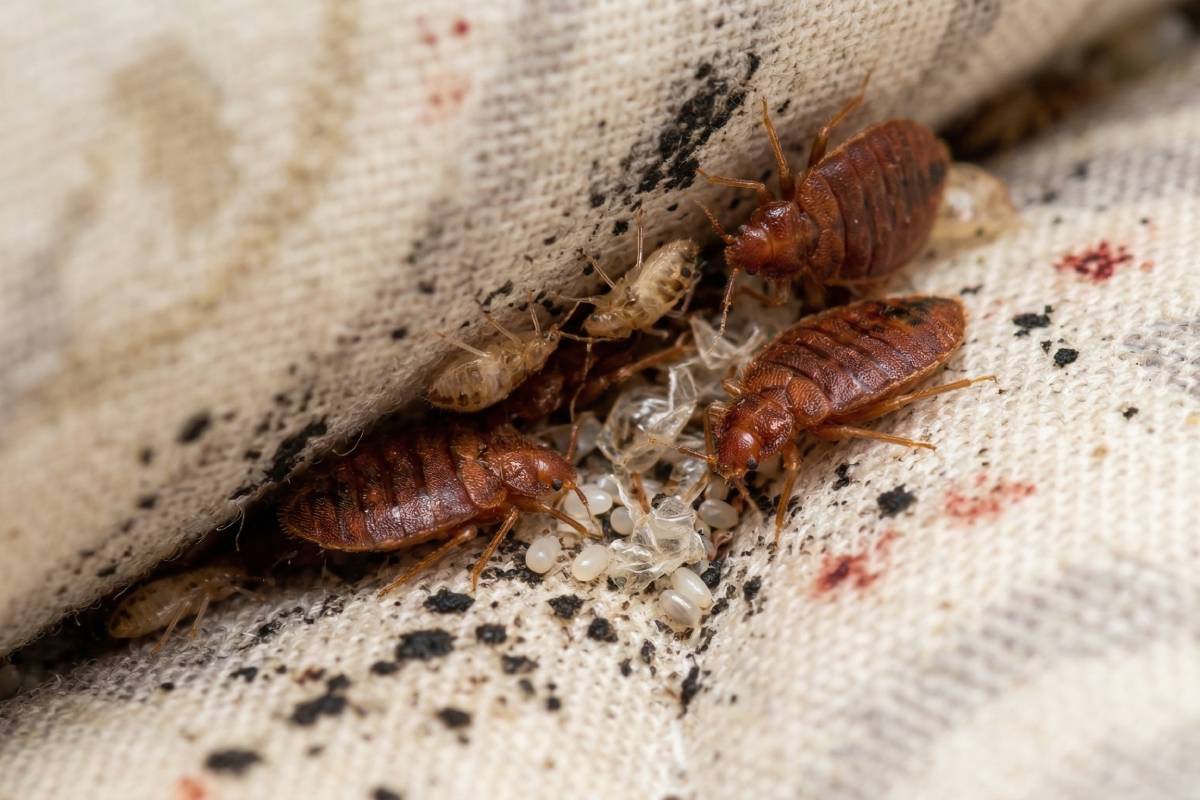
You will rarely see them moving during the day. Bed bugs are nocturnal and retreat into seams, cracks, and joints within 10 minutes of feeding.
The 6 Hard Signs of a Bed Bug Infestation
1. Rusty or Reddish Stains on Sheets or Mattress
These are either crushed bugs or blood smears from feeding. They appear as small dots or streaks, often near mattress seams or pillow edges. Fresh stains are bright red. Older stains oxidise to a dark rust or brown.
2. Dark Ink-Spot Markings
Bed bug excrement looks like a felt-tip marker dot bled into fabric. You will find clusters of these marks on mattress seams, behind headboards, along baseboards, and inside electrical outlet covers.
3. Shed Exoskeletons
Bed bugs moult five times before reaching adulthood. Each moult leaves behind a translucent shell that holds the exact shape of the insect. Finding multiple shed skins in one area confirms active breeding, not just a single stray bug.
4. A Musty, Sweet Odour
A heavy infestation produces a distinct scent from the bugs’ pheromone glands. It is often described as overripe raspberries or a damp, musty sweetness. If your bedroom smells unexpectedly sweet without an obvious source, treat it as a red flag.
5. Live Bugs in the Seams
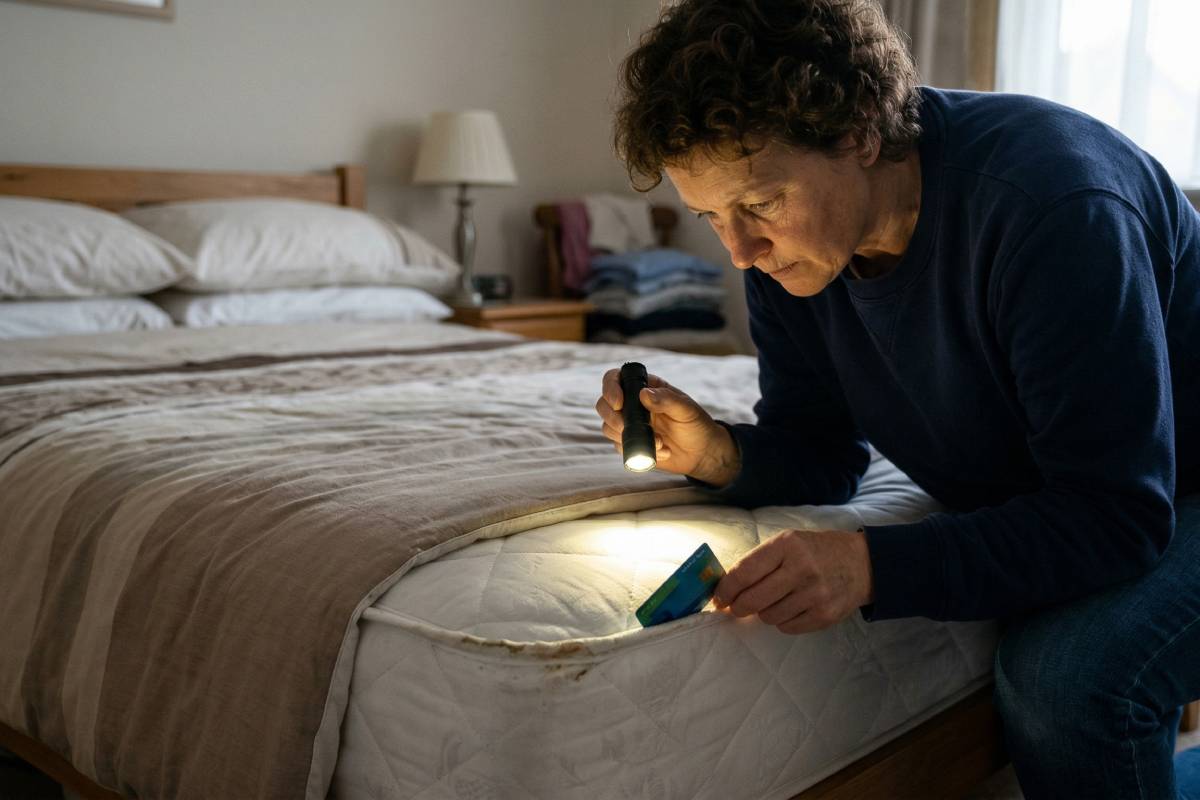
Pull back mattress seams, check the box spring corners, and inspect the headboard joints. Use a flat card or old credit card to drag along seams and dislodge hiding bugs. A torch held at a low angle across the surface makes eggs and exoskeletons far easier to spot.
6. Bite Patterns on Your Skin
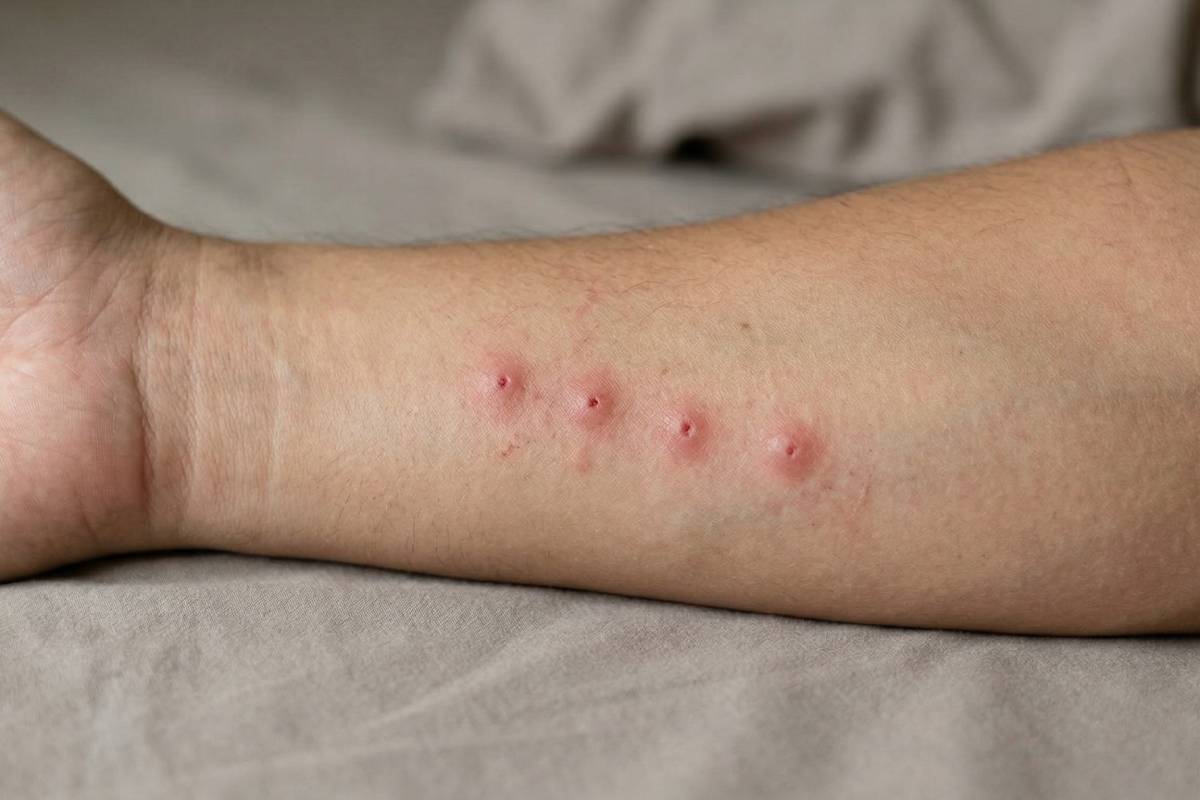
Bed bug bites appear in clusters or a line pattern (commonly called “breakfast, lunch, dinner”). They target exposed skin during sleep: arms, neck, shoulders, and ankles. The bites themselves are not painful at the time due to an anaesthetic in the bug’s saliva.
Bed Bug Bites vs Other Bites: Know the Difference
| Feature | Bed Bug Bites | Mosquito Bites | Flea Bites |
| Pattern | Clustered or linear | Random | Random, often ankle-height |
| When noticed | Morning, after sleep | Immediately | Immediately |
| Itch intensity | Moderate to intense | Moderate | Intense |
| Central puncture | Rarely visible | Visible | Visible red dot |
| Location on body | Arms, neck, shoulders | Anywhere exposed | Below knee, feet |
| Skin reaction speed | Hours to days later | Within minutes | Within minutes |
The delay in reaction is the key diagnostic marker for bed bugs. According to the U.S. Centers for Disease Control and Prevention (CDC), some people show no skin reaction at all, which means the absence of bites does not rule out an infestation.
Where to Inspect Beyond the Mattress
Most people check the mattress and stop. That is why they miss infestations or declare a room clear too early.
Primary hiding zones:
- Box spring interior (remove the gauze dust cover underneath)
- Headboard back panel and mounting brackets
- Picture frame edges and wall art with hollow backs
- Nightstand joints, drawer tracks, and undersides
- Carpet tacking strips along baseboards
- Electrical outlet plates and light switch covers
A real-world scenario: A Brisbane family replaced their mattress twice within a year after confirmed bed bug treatment. The infestation kept returning because the bugs had colonised the hollow wall cavity behind the headboard, which the exterminator had not accessed during the initial inspection. Always inspect beyond the bed frame itself.
How to Check Your Mattress Correctly
Do not just pull back the sheets and scan the surface. Work through this sequence:
Step 1: Strip all bedding and bag it immediately in sealed plastic bags. Do not shake it in the room.
Step 2: Using a bright torch and an old credit card, run the card along every seam of the mattress. Apply light pressure to push into the seam.
Step 3: Flip the mattress and repeat on the underside, paying close attention to the stitched border and any handles.
Step 4: Inspect the box spring. Remove the thin fabric panel from the bottom to access the interior frame. Bed bugs treat the box spring as their primary harborage point.
Step 5: Check the bed frame itself, particularly leg joints, screw holes, and corner brackets. Bed bugs exploit any gap wider than a credit card.
How to Prevent Bed Bug Bites While Sleeping Tonight
If you suspect an infestation but cannot get a professional in immediately, these steps reduce feeding opportunities within 24 hours.
Use a Certified Mattress Encasement
A bed bug-rated encasement (look for “certified bed bug proof” on the packaging) traps any bugs already inside the mattress and blocks re-entry. Standard waterproof mattress protectors do not seal the zipper end and leave micro-gaps at seams. The encasement must cover the mattress entirely and zip shut with a lock or tape-sealed closure.
Isolate Your Bed
Move your bed frame away from walls and furniture so no surface touches it. Bed bugs cannot fly or jump. They reach beds by climbing up the legs or crossing surface contact points. Removing all contact points cuts their access route.
Use Interceptor Traps Under Each Leg
Bed bug interceptors (plastic cups placed under each bed leg) trap bugs attempting to climb up or down. They are inexpensive and give you data: bugs found inside the outer ring climbed up from the floor; bugs found in the inner ring dropped off the bed after feeding.
Reduce Clutter in the Bedroom
Clutter is harborage. Bags, books, piled clothing, and boxes within 1 metre of the bed extend the infestation’s territory and complicate any future treatment. Clear the floor around the bed completely.
Sleep in the Centre of the Bed
Keep limbs away from bed edges where bugs concentrate. This does not eliminate bites but reduces contact frequency while you work toward a full solution.
Avoid Moving to Another Room
This is the mistake that spreads infestations through an entire home. Bed bugs follow the carbon dioxide you exhale. If you relocate to a couch or guest room, you carry bugs on your clothing and body and seed a new area.
When to Call a Pest Professional
Understanding the difference between pest control and exterminator services matters when booking treatment, as the two operate under different licensing frameworks and use different methods.
Call a licensed pest controller when you find:
- Any live bugs or shed skins (even one confirms active infestation)
- Multiple excrement clusters across more than one surface
- Bites occurring on more than one person in the household
- Bites continuing after 3+ nights of mattress encasement and bed isolation
DIY heat treatment and over-the-counter sprays achieve low success rates against established infestations. The EPA notes that bed bugs have developed resistance to pyrethroid insecticides, the most common active ingredient in retail sprays. Brisbane residents can contact SWAT Pest Control Brisbane.com.au for a professional inspection. Professional treatment, whether heat remediation or targeted chemical application, remains the only reliable resolution for an established colony.
Key Takeaways
- Confirmation requires physical evidence, not just bites. Look for stains, excrement dots, shed skins, or live bugs before assuming the cause.
- Inspection must go beyond the mattress. The box spring, headboard, and baseboards are primary harborage sites that determine whether treatment succeeds or fails.
- Same-night prevention is possible. Encasements, interceptors, and bed isolation reduce bites immediately while you arrange a professional assessment.
Discussion question: Have you found bed bug evidence in a location other than the mattress or bed frame? Where was it, and how long had the infestation gone undetected?